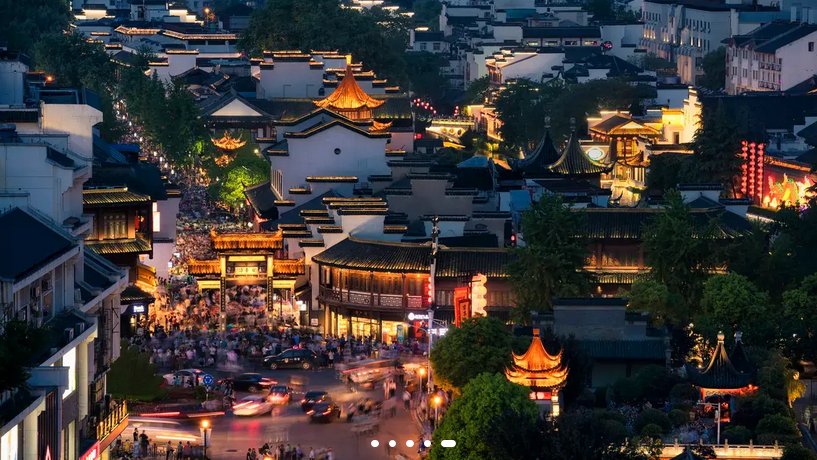
Nanjing, the ancient capital of six dynasties in China, is a city where delicious food meets profound history. From mouth-watering local snacks to magnificent historical sites, every corner of this city tells a unique story. This 4-day 3-night itinerary is designed to help you explore Nanjing’s most authentic flavors and iconic attractions at a relaxed pace—you’ll taste classic delicacies, visit sacred Buddhist sites, wander through ancient scenic areas, and immerse yourself in the city’s charm.
Itinerary Overview
This itinerary balances food exploration and sightseeing, allowing you to experience both the "food soul" and historical heritage of Nanjing. We recommend staying near Confucius Temple or Zhongshan East Road for convenient access to most attractions and food streets.
|
Day
|
Theme
|
Main Activities
|
|---|---|---|
|
Day 1
|
Arrival & Local Food Exploration
|
Arrive in Nanjing → Check into hotel → Confucius Temple & Qinhuai River Scenic Belt → Taste local snacks
|
|
Day 2
|
Historical Scenery & Buddhism Culture
|
Niushou Mountain Cultural Tourism Area → Explore Foding Palace & Peach Blossom Stream → Evening food tour
|
|
Day 3
|
Imperial History & Nature
|
Zhongshan Scenic Area → Ming Xiaoling Mausoleum → Plum Blossom Hill → Linggu Temple
|
|
Day 4
|
Nature & Last-Minute Food
|
Hongshan Forest Zoo → Taste remaining classic snacks → Departure
|
Practical Preparation for Foreign Visitors
-
Language: Most locals don’t speak much English. Download Google Translate with offline Chinese packs, or use WeChat’s built-in translation tool. Locals are friendly and will try their best to help you communicate.
-
Payment: Alipay and WeChat Pay are widely accepted in restaurants, shops, and attractions. Carry some cash (Chinese Yuan) for small street stalls. You can exchange currency at Nanjing Lukou International Airport or banks in the city center.
-
Accommodation: Recommended areas: Confucius Temple (close to food and night scenes) or Zhongshan East Road (convenient for transportation and shopping). Many hotels offer English services.
-
Weather: Nanjing has a subtropical monsoon climate. Spring (March-May) and autumn (September-November) are the best travel seasons—mild and comfortable. Summer is hot and humid, winter is cold. Pack accordingly.
Day 1: Arrival & Confucius Temple Food Tour
Morning: Arrival & Check-in
Arrive at Nanjing Lukou International Airport or Nanjing Railway Station. Take the subway or taxi to your hotel (near Confucius Temple is recommended) and check in. Rest for a while to recover from your journey, then start your food adventure.
Afternoon: Confucius Temple (Fuzimiao)
Founded in the Song Dynasty, Confucius Temple is located beside Gongyuan Street on the north bank of the Qinhuai River. Originally built to worship Confucius, it has been destroyed and rebuilt many times and is now the core attraction of the Qinhuai River Scenic Belt.
In the main hall (Dacheng Hall), you can admire a 6-meter-high portrait of Confucius and 38 colored stone inlaid murals "Confucius’ Life Story", which show the key events in Confucius’ life. Walk around the temple to feel the traditional Chinese culture and ancient architecture.
Address: Gongyuan Street, Qinhuai District, Nanjing
Opening Hours: 08:30 - 22:00 daily
 Nanjing/f4d74c1293fd4be0ad84ea65f6e4bca1.jpg">
Evening: Qinhuai River Scenic Belt & Food Feast
The Qinhuai River Scenic Belt centers on Confucius Temple, including the streets, residences and historic sites on both sides of the river. It’s famous for the poem "Swallows that once nested in the mansions of the nobles now fly into ordinary people’s homes" from Liu Yuxi’s "Wuyi Lane".
Take a boat tour on the Qinhuai River to enjoy the beautiful night view of the ancient buildings along the river (boat tickets: around 80-100 Yuan per person). After the boat tour, wander around the food streets near Confucius Temple and taste these classic Nanjing snacks:
-
Duck Blood Vermicelli Soup: A classic dish of Jinling cuisine, made with duck blood, duck intestines, duck liver, vermicelli and duck soup. It has a mild taste and fresh aroma, with two versions: clear soup and white soup. Add chili oil or coriander according to your taste.
-
Beef Pot Stickers: One of the "Eight Great Delicacies of Qinhuai", with tender top and crispy bottom. The beef filling is seasoned with prickly ash water to remove fishy smell and enhance freshness.
-
Soup Dumplings: Thin skin, rich soup and delicious filling. The key is to bite a small hole first to drink the soup, then eat the filling—be careful, it’s hot!
Tip: Try local food stalls instead of big restaurants for a more authentic taste. Most stalls have pictures of the food, so you can point to what you want if you can’t communicate in Chinese.
Nanjing/24a2ac59d865421bbcf9a14ee6ec138c.jpg">Day 2: Niushou Mountain Cultural Tourism Area
Today, we’ll explore Niushou Mountain, a sacred Buddhist site with beautiful natural scenery and a long history. It’s about 20 kilometers from the city center—take subway Line S1 to Niushou Mountain Station, then take a shuttle bus to the scenic area.
Morning: Foding Palace
Niushou Mountain, also known as Tianque Mountain, gets its name because its two peaks on the top look like the horns of an ox. It’s famous for its beautiful scenery, known as "Spring Niushou" (Niushou in spring is the most beautiful).
Foding Palace is the core attraction of the scenic area, themed on enshrining the Sakyamuni Buddha’s parietal bone relic. It consists of a large dome and a small dome, symbolizing external and internal offerings. Built in an original mine pit, it has 6 underground floors and 3 above-ground floors, grand and solemn.
The Buddha’s parietal bone relic is enshrined here permanently. You can pay homage to it on special Buddhist festivals—call the scenic area to confirm the specific time before your visit.
Afternoon: Historical Relics & Peach Blossom Stream
Niushou Mountain is a sacred Buddhist place with a history of over 1,500 years. In 503 AD, Xu Du, a minister of the Liang Dynasty, built Foku Temple, the first temple on the mountain. In the Tang Dynasty, Master Farong founded the Niutou Zen School here, which played an important role in transforming Indian Zen into Chinese Zen.
Visit historical sites such as Yue Fei’s Anti-Jin Fortress and Zheng He Cultural Park, then go to Peach Blossom Stream. Located at the east entrance of Niushou Mountain, the stream winds down from Yinlong Lake, with 26 types of peach trees planted on both sides. In spring, the peach blossoms bloom, forming a beautiful sea of flowers.
Address: Niushou Mountain Cultural Tourism Area, Jiangning District, Nanjing
Opening Hours: 09:00 - 17:30 daily (last entry at 16:30)
Ticket: Around 98 Yuan per person
Nanjing/22e10d8e5f2d4b96a37d0f824e189ca4.jpg">Evening: Salted Duck Tasting
Return to the city center and taste Nanjing’s iconic dish—Salted Duck. Known for its white skin, tender meat and non-greasy taste, it’s made through a unique process: stir-frying salt, marinating, drying and boiling. The most famous one is made in August of the lunar calendar when osmanthus blooms, so it’s also called "Sweet Osmanthus Duck".
Recommendation: Visit a local time-honored restaurant like "Yurun" or "Zhengxing" to taste authentic salted duck. You can also buy vacuum-packed salted duck as a souvenir.
Day 3: Zhongshan Scenic Area & Ming Xiaoling Mausoleum
Zhongshan Scenic Area, also known as Dongjiao Scenic Area, is called Zijin Mountain by Nanjing locals. It includes three major scenic spots from west to east: Sun Yat-sen Mausoleum, Ming Xiaoling Mausoleum and Linggu Temple—all must-visit attractions in Nanjing. The area is quiet and cool, with trees covering the mountain roads, perfect for a relaxing walk.
Nanjing/e30e0e69a6b54aa3a2e148cdf52d2abf.jpg">Morning: Ming Xiaoling Mausoleum
Located in Zhongshan Scenic Area, Ming Xiaoling Mausoleum is the tomb of Zhu Yuanzhang, the founding emperor of the Ming Dynasty, and his empress Ma. It is magnificent, representing the achievements of early Ming architecture and stone carving art, and directly influencing the shape of imperial mausoleums in the Ming and Qing dynasties.
Key attractions of the mausoleum: Sacred Way: 2,400 meters long from Xiamafang to the main gate of Ming Xiaoling, winding and deep (different from the straight sacred way of traditional imperial mausoleums). It is divided into Shixiang Road and Wengzhong Road, with 12 pairs of tall stone beasts and 2 pairs of civil and military officials on both sides—all carved from a single piece of stone.Sacrificial Hall (Xiaoling Hall): Originally used to enshrine the spirit tablets of Zhu Yuanzhang and Empress Ma, the original hall was destroyed, and now it is a historical materials exhibition hall of Ming Xiaoling.Square City & Ming Tower: The Square City is a huge building in front of the treasure top, built with large stone strips. The Ming Tower is on top of the Square City, with a restored roof. Climb the steps on both sides of the Square City to reach the Ming Tower for a panoramic view.Treasure Top (Baoding): A circular mound about 400 meters in diameter, where Zhu Yuanzhang and Empress Ma are buried. You can see the inscription "This mountain is the tomb of Emperor Taizu of the Ming Dynasty" on the south wall—no further entry is allowed here.
Afternoon: Plum Blossom Hill & Linggu Temple
Plum Blossom Hill is located south of Ming Xiaoling, with more than 13,000 plum trees. In late December to late February every year, the plum blossoms and wintersweets bloom, attracting numerous visitors. You can also see Sun Quan’s Tomb on Plum Blossom Hill.
Near the Shixiang Road of the Sacred Way, there is a Cherry Blossom Garden—cherry blossoms bloom in late March to early April, making it a popular spot for photography.
In the afternoon, visit Linggu Temple, a famous ancient temple in Nanjing. It is quiet and serene, with a history of over 1,500 years. The Linggu Pagoda in the temple offers a beautiful view of the entire Zhongshan Scenic Area.
Address: Zhongshan Scenic Area, Xuanwu District, Nanjing
Opening Hours: 08:30 - 17:00 daily
Ticket: Combined ticket for Zhongshan Scenic Area (including Ming Xiaoling, Linggu Temple, etc.) is around 100 Yuan per person.
Nanjing/5693ebd7447b4ca9b0b5f04c0787628f.jpg">Day 4: Hongshan Forest Zoo & Last-Minute Food
Morning: Hongshan Forest Zoo
Located north of Xuanwu Lake, Hongshan Forest Zoo is built on three mountains, close to Nanjing Railway Station. It was moved from the original Nanjing Xuanwu Lake Zoo and has a large area and a variety of animals.
Highlights: Bird Area: See flamingos, ostriches, pheasants and other birds.Peacock Garden: Watch green peacocks and white peacocks spread their tails—it’s a favorite moment for visitors.Parrot House: A talking gray parrot, an "elder" of the zoo, is very popular.Children’s Amusement Park: Perfect for families with kids.
Address: Hongshan Road, Xuanwu District, Nanjing
Opening Hours: 08:30 - 17:00 daily (last entry at 16:00)
Ticket: Around 40 Yuan per person
Nanjing/a0f35f771be74a88852ce69bf8e94ab9.jpg">Afternoon: Last-Minute Food & Departure
Before departure, taste the remaining classic Nanjing snack—Plum Blossom Cake. Originating in the Ming Dynasty, it is named for its plum blossom shape. Emperor Qianlong praised it highly during his southern tour. It has a crispy outer skin, rich filling, sweet but not greasy, and a soft taste.
Buy some souvenirs (such as vacuum-packed salted duck, plum blossom cake) and then head to the airport or railway station to end your wonderful trip to Nanjing.
Nanjing Food Summary for Foreigners
|
Food Name
|
Feature
|
Recommendation
|
|---|---|---|
|
Duck Blood Vermicelli Soup
|
Mild, fresh, tender and smooth
|
Street stalls near Confucius Temple
|
|
Beef Pot Stickers
|
Tender top, crispy bottom, fresh beef filling
|
Local snack shops in Qinhuai District
|
|
Salted Duck (Sweet Osmanthus Duck)
|
White skin, tender meat, non-greasy
|
Yurun, Zhengxing (time-honored restaurants)
|
|
Soup Dumplings
|
Thin skin, rich soup, delicious filling
|
Confucius Temple Food Street
|
|
Plum Blossom Cake
|
Crispy outer skin, soft inner filling, sweet but not greasy
|
Street stalls near Hongshan Forest Zoo
|
Final Thoughts
In 4 days and 3 nights, you’ll experience the best of Nanjing—delicious food that satisfies your taste buds, historical sites that tell ancient stories, and natural scenery that calms your mind. Nanjing is not only a city of history but also a city of life—every bite of food and every step of the scenery reflects its unique charm.
We hope this guide helps you have a wonderful trip to Nanjing. Come and explore this ancient and lively city—you’ll leave with unforgettable memories!