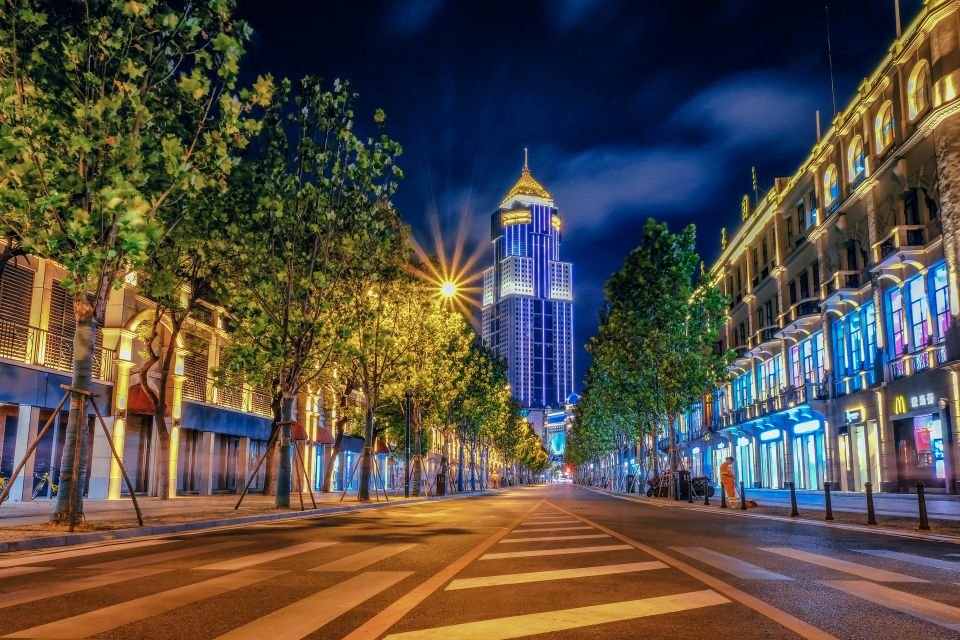
Wuhan, known as the "River City" (Jiangcheng), is a charming city where ancient history meets lively local life. This 3-day itinerary lets you experience its most iconic attractions—from historic landmarks and cultural treasures to beautiful natural scenery and delicious street food. It’s perfectly designed to help you make the most of your trip without rushing.
Itinerary Overview
This compact 3-day route covers Wuhan’s core highlights, balancing history, culture, nature and food. All attractions are easily accessible by public transport or taxi, making your trip smooth and enjoyable.
|
Day
|
Main Attractions
|
|---|---|
|
Day 1
|
Jianghan Road Pedestrian Street → Qingchuan Pavilion → Wuhan Yangtze River Bridge → Yellow Crane Tower → Wuchang River Beach
|
|
Day 2
|
Hubu Lane → 1911 Revolution Museum (North Area) → Hubei Provincial Museum
|
|
Day 3
|
Wuhan University → East Lake Ecotourism Scenic Area
|
Day 1: Iconic Landmarks & River Views
Day 1 focuses on Wuhan’s most famous landmarks, letting you experience the city’s history and the beauty of the Yangtze River.
1. Jianghan Road Pedestrian Street
Located in the center of Hankou, Jianghan Road is a 1,200-meter-long century-old commercial street with a rich history—it was once a British concession. The street is like an "architecture museum of the 20th century," with more than a dozen excellent modern buildings. Today, it’s a popular shopping spot, with numerous department stores, fashion brands and local shops.
Address: Jianghan Road, Jianghan District, Wuhan
Opening Hours: 24 hours a day, 7 days a week
Tip: Take your time to walk along the street, admire the unique architecture, and stop by local snack stalls for a quick bite. It’s also a great place to buy souvenirs.
 Wuhan/f24c84310030404c8473b5f3358dbcba.jpg">
2. Qingchuan Pavilion
Perched on Guishan Mountain in Hanyang, Qingchuan Pavilion overlooks the Yangtze River and faces the Yellow Crane Tower across the river. First built in the Ming Dynasty, it gets its name from a poem by the Tang Dynasty poet Cui Hao. The current building was rebuilt in the 1980s based on historical photos.
The scenic area consists of three main buildings—Qingchuan Pavilion, Yujing Palace and Tiemen Pass—along with pavilions, archways and corridors, all full of classical Chinese charm. Climb to the pavilion, feel the river breeze and enjoy the stunning river view—it’s a peaceful and pleasant experience. Locals also love to take wedding photos here for its beautiful scenery.
Address: No. 86 Ximachang Street, Hanyang District, Wuhan
Opening Hours: Daytime: 09:00 - 17:00 (last ticket and entry at 16:30); Evening: 18:30 - 21:30 (last ticket and entry at 21:00)
Tip: Qingchuan Pavilion is small and adjacent to Tiemen Pass—visit them together. In late March, cherry blossoms bloom near the nearby Qingchuan Hotel, adding more beauty to the scenery. It’s only a 500-meter walk to the Wuhan Yangtze River Bridge and a 2-kilometer bike ride to the Parrot Island Yangtze River Bridge.
Wuhan/9e5e7b4e621b442e92c43d6ffd2e020a.jpg">3. Wuhan Yangtze River Bridge
As the first bridge built over the Yangtze River in China and the first public-rail dual-use bridge in New China, this bridge connects Guishan Mountain in Wuchang and Sheshan Mountain in Hanyang. With the support of the former Soviet Union during its construction, it features a strong Russian architectural style—solid and magnificent.
You can walk across the bridge from near the Yellow Crane Tower or the South Gate of Guishan Park (takes about 1 hour), or take an elevator from the bridge tower to the bridge deck. Standing on the bridge, you can enjoy a unique view of Wuhan’s three towns (Hankou, Hanyang, Wuchang).
Address: Wuhan City, Hubei Province (spans Hankou, Hanyang and Wuchang)
Opening Hours: 24 hours a day, 7 days a week
Tip: The night view of the bridge is particularly beautiful—don’t miss it if you pass by in the evening. The bridge uses the "pipe column drilling method" to solve deep-water foundation problems, with a main span of 128 meters (upper road bridge, lower double-line railway bridge).
Wuhan/1080a095d55f4aad84d93f483728f95c.jpg">4. Yellow Crane Tower
The Yellow Crane Tower is Wuhan’s iconic landmark, located on Sheshan Mountain in Wuchang by the Yangtze River. It is said to have been built during the Three Kingdoms period, but has been destroyed and rebuilt many times—the current building was rebuilt in 1985. Many famous poets have written masterpieces about it throughout history.
Climb to the top of the tower to enjoy a spectacular view of the Yangtze River and Wuhan’s three towns. It’s a must-visit spot to experience Wuhan’s historical and cultural heritage.
Address: No. 1 West Slope, Sheshan Mountain, Wuchang District, Wuhan
Opening Hours: Contact the scenic spot to confirm the specific opening hours before your visit.
Wuhan/d11e9754c0d14235a4adbc2cf342bd4b.jpg">5. Wuchang River Beach
Stretching from Wuchang Shipyard to Qinyuan Road, Wuchang River Beach is full of simple local life, unlike the grand and prosperous Hankou River Beach across the river. After visiting Hubu Lane, walk along Linjiang Avenue past Hanyang Gate, and you’ll see the sign of Wuchang River Beach near Zhongshan Road.
On summer nights, locals often come here to enjoy the river breeze and watch the night view of Hankou River Beach across the river. It’s a great place to relax after a busy day of sightseeing.
Address: Near Zhongshan Road, Linjiang Avenue, Wuchang District, Wuhan
Opening Hours: 06:00 - 23:00 daily
Tip: Taking a night cruise on the Yangtze River is also a great option—you can board the boat at 18:00, and it departs around 19:30, offering a wonderful view of the river at night.
Wuhan/805b3be0bb9f434ea54da768a910598b.jpg">Day 2: Local Food & Cultural Treasures
Day 2 is all about Wuhan’s food culture and historical relics—start your day with local breakfast, then explore museums to learn about the city’s history.
1. Hubu Lane
In Wuhan, having breakfast is called "Guo Zao" (literally "passing the morning"), and Hubu Lane is the most famous place for this tradition. Located in Wuchang District, this short street gathers dozens of traditional Wuhan snacks, including many time-honored brands such as Cai Linji Hot Dry Noodles, Duohuzhai Bean Curd Skin and Jinchu Soup Dumplings. You can taste all classic Wuhan breakfasts here, such as paste soup noodles, soup dumplings and hot dry noodles.
Address: Wuchang District, Wuhan City, Hubei Province
Opening Hours: 24 hours a day, 7 days a week
Tip: The lane is very crowded—average daily passenger flow is about 80,000, and it increases to 130,000 on weekends. Visit on weekday mornings or late afternoons in spring and autumn to avoid crowds.The buildings here are in Ming and Qing styles (renovated in 2003), with blue tiles, white walls and wooden doors, full of old Wuhan charm.Besides Wuhan snacks, you can also find national specialties like Nanjing duck blood vermicelli soup and Changsha stinky tofu.
Wuhan/9804dd3060cc4b6fa3aac62807e8e1e7.jpg">2. 1911 Revolution Museum (North Area)
Formerly the Hubei Advisory Bureau in the late Qing Dynasty (built in 1910), this museum is where the revolutionary party established a military government after the Wuchang Uprising in October 1911 (the first shot of the 1911 Revolution). The main building is a small two-story brick-and-wood Western-style building with red walls and red tiles, commonly known as the "Red Building" by locals.
There are two main exhibitions in the museum: "Restoration Exhibition of the Original Appearance of the 1911 Revolution Museum (North Area)": Restores the scene of the early days of the military government, showing its organizational structure. You can also see the "Eighteen-Star Flag," the military flag of the Wuchang Uprising—each of the 18 yellow stars represents the Han people in 18 provinces inside the Shanhaiguan Pass."Exhibition of Historical Relics of the Wuchang Uprising of the 1911 Revolution": Shows the historical scene of the uprising through cultural relics, photos and models, including portraits of figures related to the uprising. Don’t miss the photo of Zhang Zhujun, president of the Shanghai Red Cross, who organized a civilian medical team and smuggled revolutionary Huang Xing to Wuhan disguised as a Red Cross doctor during the uprising.
Address: No. 1 Wuluo Road, Wuchang District, Wuhan
Opening Hours: 09:00 - 17:00 daily (last entry at 16:00)
Tip: The museum guides are very professional and patient, explaining the magnificent history vividly—it’s perfect for visitors who want to learn about China’s modern history, even with children.
Wuhan/60d43c8739844478925f40c0cf13a395.jpg">3. Hubei Provincial Museum
Composed of three archaic-style buildings—the Comprehensive Exhibition Hall, the Chu Culture Hall and the Chime Bells Hall—the museum’s layout reflects the high-platform architectural style of the ancient Chu State ("one platform, one hall" and "multiple platforms in groups"). It houses four national treasures: Zeng Hou Yi Chime Bells: Unearthed from the Tomb of Zeng Hou Yi, a masterpiece of ancient Chinese musical instruments.Sword of Gou Jian, King of Yue: A fine work of the cold weapon era.Yun County Human Skull Fossil: Dating back 1 million years.Four Loves Plum Vase: A masterpiece of Yuan Dynasty blue and white porcelain.
Address: No. 160 East Lake Road, Wuchang District, Wuhan
Opening Hours: 09:00 - 17:00 daily (last entry at 16:00)
Tip: It’s highly recommended to hire a guide (like Guide Xiao Xiaobei, who is highly praised by visitors) to learn the stories behind the cultural relics. The guide can explain the history and technology of the relics in detail, making your visit more meaningful.
Wuhan/d754750f81cd4afe968fabb0b4bb283b.jpg">Day 3: Nature & Campus Beauty
Day 3 combines the beauty of nature and the elegance of a famous university—walk around Wuhan University and ride a bike along East Lake for a relaxing day.
1. Wuhan University
With a long history dating back to Ziqiang Academy founded by Zhang Zhidong in the late Qing Dynasty, Wuhan University is surrounded by Luojia Mountain and close to East Lake. The campus is shaded by green trees and retains many excellent historical buildings combining Chinese and Western styles.
In recent years, Wuhan University has become famous for its cherry blossoms—during cherry blossom season (usually late March to early April), it attracts tourists from all over China, so the campus has time and capacity restrictions for visitors.
Address: No. 299 Bayi Road, Wuchang District, Wuhan
Opening Hours: 08:30 - 17:30 daily
Tip: Hire a student guide—they are professional, enthusiastic and charge a low fee. A 2-3 hour mini-tour with a student guide is a great way to learn about the university’s history and culture.
Wuhan/c3f47d6c07e5438080f6582ef263fa88.jpg">2. East Lake Ecotourism Scenic Area
As an urban lake in Wuhan, East Lake is one of the city’s characteristic scenic spots, famous for its beautiful mountains and rivers and rich Chu culture. It is divided into four main areas: Tingtao Scenic Area: A great place for leisure and entertainment with friends.East Lake Moshan Scenic Area: Perfect for flower viewing (especially cherry blossoms in spring).Luoyan Scenic Area: A good spot for bird watching.Chuidi Scenic Area: Ideal for relaxing walks and picnics.
Address: No. 16 Yanhu Avenue, Wuchang District, Wuhan
Opening Hours: 24 hours a day, 7 days a week
Tip: Rent a bike to ride along the East Lake Greenway—it’s the best way to enjoy the lake’s scenery. In spring, the cherry blossoms by the lake create a beautiful pink scenery.
Wuhan/28aa9345fcee456f82000741d8f6029b.jpg">Practical Tips for Foreign Visitors
-
Language: Most locals don’t speak much English. Download Google Translate with offline Chinese packs, or use WeChat’s built-in translation tool for communication. Locals are friendly and will try their best to help you.
-
Payment: Alipay and WeChat Pay are widely accepted in shops, restaurants and hotels. Carry some cash (Chinese Yuan) for small stalls and markets. You can exchange currency at Wuhan Tianhe International Airport or banks in the city.
-
Weather: Wuhan has a subtropical monsoon climate—hot and humid in summer, cool in autumn and cold in winter. Wear light and breathable clothes in summer, and warm clothes in winter. Don’t forget sunscreen and insect repellent when visiting in spring and summer.
-
Accommodation: Stay near Jianghan Road or Wuchang Railway Station for convenience—you can easily reach most attractions. Many hotels offer English services, so don’t hesitate to ask for help.
-
Etiquette: Remove your shoes when entering temples. Ask for permission before taking photos of locals. Tipping is not required in China.
Final Thoughts
Wuhan is a city that combines history, nature and local flavor. In just 3 days, you can visit iconic landmarks, taste delicious snacks, explore cultural relics and enjoy beautiful natural scenery. Whether you’re a history lover, a foodie or a nature enthusiast, Wuhan has something for everyone.
Pack your bags and get ready to explore this charming River City—you’ll leave with unforgettable memories!