A 4-day trip to Chongqing was enough to make me fall in love with this charming mountain city. Every corner is filled with the aroma of hot pot, stylish urban locals are everywhere, and there are countless amazing attractions waiting to be explored. I told my mom that we must come back for a 7-day trip in winter—there’s just so much more to see and do!
Self-Driving in Chongqing: Easier Than You Think
As usual, we rented a car from a reliable car rental platform (similar to HiCar) for the entire trip. Contrary to popular online rumors, Chongqing’s “8D” traffic is not as intimidating as it sounds—self-driving is totally feasible, and it’s even a great way to experience the unique twists and turns of the city’s roads.
Key tip: Choose your car rental location carefully. Most car rental shops offer one-way return (you can pick up the car in Chongqing and return it in another city), which means you can easily extend your trip to nearby cities if you have extra time. This flexibility is a huge plus for travelers who want to explore more of the region.
Pro tip for foreign drivers: Remember to bring your international driver’s license (IDP) along with your original passport. It’s also wise to book your car in advance, especially during peak seasons, to avoid high prices or limited vehicle options. For downtown exploration, a compact car is more convenient than a large SUV, as the old alleys in Yuzhong District are narrow and hard to navigate with big vehicles.
Day 1: City Walking & Iconic Landmarks
We arrived in Chongqing late at night, and luckily, the car rental shop was open 24/7. We picked up the car directly and drove to the city center—no need to waste a night at an airport hotel. This saved us precious time and let us start our adventure early the next day.
September in Chongqing is still extremely hot! I hadn’t experienced constant light sweating in a long time, but that’s what every day felt like here. Even a sun protection jacket was too hot to wear—so make sure to pack light, breathable clothes and plenty of sunscreen!
We were lucky, though: the weather was perfect with no heavy rain. We heard it rained heavily three days before we arrived, so we dodged a bullet.
Must-Visit Spots on Day 1
-
Jiefangbei Square: The heart of downtown Chongqing, packed with malls, restaurants, and neon lights. It’s the perfect place to feel the city’s energy and do some light shopping. We stayed at Deya Hotel near Jiefangbei—it’s highly recommended for its convenient location, as everything is within walking distance.
-
Liziba Light Rail Station: One of the most famous metro stations in the world—you’ll watch the light rail pass straight through a residential building! It’s a surreal experience for first-time visitors (locals are probably used to it by now). Check the train schedule in advance to avoid waiting too long for the perfect photo opportunity.
-
Shancheng Lane (Mountain City Lane): A scenic pedestrian path with old-style buildings and beautiful river views. It’s a peaceful escape from the busy city and a great spot to take photos with blue skies, green trees, and the Yangtze River in the background.
-
Shibati (Eighteen Stairs): We didn’t plan to visit here at first, as online guides said it’s too commercialized. But we stumbled upon it after walking from Shancheng Lane, and we’re glad we did! It’s a restored historic neighborhood with steep, layered streets and old Chongqing architecture—perfect for taking photos to “show off” to friends back home.
-
Three Gorges Museum & Chongqing People’s Auditorium: The museum’s 3D screen on the first floor is amazing—it’s so realistic that it feels like dinosaurs are about to step out! My mom was impressed by the high technology. The People’s Auditorium is a stunning example of traditional Chinese architecture—its grandeur is truly eye-catching, even for those who don’t usually notice buildings.
-
Huguang Guild Hall: A beautifully preserved historic complex that shows how merchants and migrants lived in Chongqing centuries ago. It’s a great place to learn about the city’s history and culture.
-
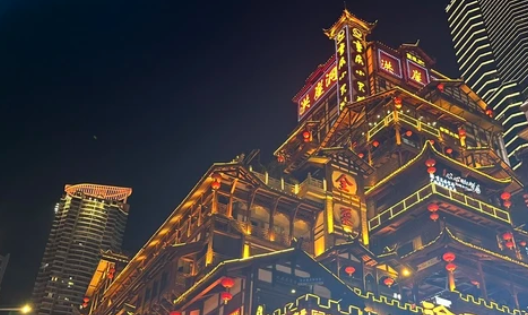
Hongya Cave: The city’s most iconic landmark, a cliffside complex of traditional-style buildings that looks like it’s straight out of a fantasy movie—especially at night when all the lights are on. It’s extremely crowded, so we recommend taking photos from Qiansimen Bridge instead of squeezing into the cave itself. The view from the bridge is just as stunning and much less crowded.
Food & Souvenirs on Day 1
Wanzhan Noodles (Pea and Minced Pork Noodles): We tried Wanzhan Noodles at Dengdeng Noodle House in Shibati. It was okay—not amazing, but not bad either. Maybe it’s because it’s located near Jiefangbei (tourist areas sometimes have less authentic food). For better local flavor, try smaller, non-tourist noodle shops.
Spicy Mala Tang: We had a bowl of spicy oil-splashed mala tang (spicy hot pot skewers) near the People’s Auditorium. It’s a bit different from regular mala tang and very spicy—perfect for spice lovers!
Hot Pot Warning: We ate at a hot pot restaurant near Jiefangbei (with a name starting with “Huang”)—avoid it! It was not tasty at all. The fish in the restaurant looked nicer than the hot pot itself.
Souvenirs: I love browsing small souvenir shops! I bought many fridge magnets for my colleagues and friends. There was a lovely shop (I forgot the name) with original “Feichacha” fridge magnets—they were so cute! I spent 400 yuan and got an extra fridge magnet for free. The shop had an adorable dog that stole my heart—look for it if you visit!
Pro tip: Buy souvenirs when you see something you like—you might not find the same items in other spots. I never saw that original fridge magnet shop again during the trip.
Tea Yanyue Se: I finally tried Tea Yanyue Se (a popular Chinese milk tea brand) here—it was a nice experience for someone who had never tasted it before. Also, be prepared for mosquitoes—there are quite a few, especially near the rivers.
Bonus: We went to Lotte Mart hoping to find mini Labubu toys (a popular collectible), but they were sold out. It seems the Labubu trend is still going strong in Chongqing!
A small regret: I wanted to enjoy the river breeze, drink a little wine, listen to music, and watch the river view—but I didn’t, since I wanted to be a good kid in front of my mom. Maybe next time!
Day 2: Food Tour & Cute Pandas
Day 2 was all about food! My mom didn’t understand my plan at first, but she ended up enjoying it and eating a lot. Chongqing’s food is famous for its spiciness, but don’t worry—most restaurants can adjust the spice level for you. If you can’t handle spicy food, just say “bu yao la” (no spicy) to the staff.
Must-Eat Food on Day 2
-
Linma Wontons: This is one of the few restaurant names I remembered—their wontons are amazing! I ate two servings. The filling is juicy, and the skin is thin—definitely a must-try.
-
Yanghe Road Food Street: After visiting the zoo, we went to Yanghe Road for more local snacks. This street is popular with locals—every shop is delicious, affordable, and authentic.
-
Yanghe Shaomai & Fish Soup Rice Noodles: The shaomai has a very thin skin, different from the ones in northern China. The fish soup rice noodles are fresh and flavorful—there was a long line, which is always a good sign.
-
Yikou Tang Jiao (One Bite Soup Dumplings): Located right next to the shaomai shop. I loved the chicken juice pot stickers—crispy and fragrant. My mom preferred the soup dumplings, which were juicy and tender.
-
Cold Skewers: We bought cold skewers from a shop on Yanghe 3rd Road. The dried tofu was chewy and flavorful, and the “mild spicy” was not spicy at all—perfect for those who don’t like too much heat. The service was also great.
-
Napoleon Cake: We bought too much and couldn’t finish it—wasteful! Eat it quickly because it melts easily in the heat. It was so delicious that I wished I had a bigger stomach.
-
Chongqing Zoo: Cute Pandas
We visited Chongqing Zoo in the afternoon—it was still hot, and we were sweating the whole time, but it was worth it for the pandas! One panda was stuck in a tree branch, burping nonstop after eating its fill. It was so cute and lively—changing positions like it was thinking about life. The other pandas were full and lying down to rest. Even after we walked away, we saw it playing around—it was such a healing sight!
Pro tip: Visit the zoo in the morning when the pandas are most active. There are many pandas here, but it can get crowded, so be patient if you want to take photos.
Practical Tips for Foreign Visitors
-
Accommodation: Staying near Jiefangbei is highly recommended—it’s convenient for visiting most attractions and trying local food. FunGee Huanzhi River View Hotel is another great option, located between Hongya Cave and Jiefangbei, with smart rooms and free amenities like popcorn and herbal tea.
-
Language: Most locals are friendly and helpful, even if they don’t speak much English. Download Google Translate with offline Chinese packs, or use WeChat’s built-in translation tool to communicate. If you speak a dialect (like my mom’s Tangshan dialect), you might need to use translation apps to help locals understand you.
-
Payment: Most shops, restaurants, and hotels accept Alipay and WeChat Pay. However, it’s a good idea to carry some cash (Chinese yuan) for small stalls and markets. You can exchange currency at the airport or banks in the city.
-
Weather: September is still hot and humid in Chongqing. Pack light, breathable clothes, sunscreen, a hat, and insect repellent. Avoid heavy clothes—you’ll regret it!
-
Local Etiquette: Chongqing people are warm and welcoming. When entering temples, remember to remove your shoes. Ask for permission before taking photos of locals. Tipping is not required in China.
-
Food Notes: If you’re not used to spicy food, start with mild dishes and gradually adjust. Sichuan cuisine (including Chongqing food) is known for its numbing-spicy flavor, but most restaurants can make it less spicy for you. Don’t be afraid to try street food—it’s safe and a great way to taste authentic local flavors.
-
Avoid Scams: Be careful with fruit shops near tourist attractions—we encountered one near Huguang Guild Hall with unfresh fruit. Stick to local markets or convenience stores for fresh snacks.
Final Thoughts
Chongqing is a city of surprises—where modern skyscrapers meet ancient alleys, and spicy food meets warm hospitality. Even 4 days are not enough to explore all its charm. Whether you’re a foodie, a history lover, or just someone who enjoys exploring new cities, Chongqing has something for everyone.
I can’t wait to come back in winter for a longer trip—there are still so many places to visit, foods to try, and memories to make. Pack your bags, rent a car, and get ready to fall in love with this magical mountain city!